UNESCO World Heritage Sites
9:43 AM
UNESCO World Heritage Sites
Africa morocco
Morocco is home to nine UNESCO World Heritage Sites
| Image | Description |
|---|
| Archaeological Site of Volubilis |  | Meknes | Cultural:
(ii), (iii), (iv), (vi) | 42 (100) | 1997 | The important Roman outpost of Volubilis was founded in the 3rd century BCE to become the capital of Mauritania. It contained many buildings, the remains of which have survived extensively to this day. |
|---|
| Historic City of Meknes | 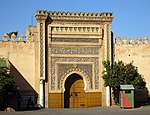 | Meknes | Cultural:
(iv) | — | 1996 | The former capital was founded in the 11th century and turned into a city with Spanish-Moorish influence during the 17th and 18th centuries. |
|---|
| Ksar of Ait-Ben-Haddou | 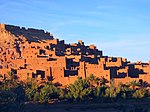 | Aït Benhaddou
(Ouarzazate Province) | Cultural:
(iv), (v) | 3 (7.4) | 1987 | The Ksar is an example of a traditional pre-Saharan habitat, surrounded by high walls and reinforced with corner towers. |
|---|
| Medina of Essaouira (formerly Mogador) |  | Essaouira | Cultural:
(ii), (iv) | 30 (74) | 2001 | The fortified seaport built during the late 18th century has a mix of North African and European architecture, and was a major trading hub between the Sahara and Europe. |
|---|
| Medina of Fez | 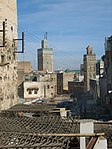 | Fez | Cultural:
(ii), (v) | 280 (690) | 1981 | The former capital was founded in the 9th century and features the world's oldest university. The urban fabric and main monuments date from the 13th and 14th centuries. |
|---|
| Medina of Marrakesh | 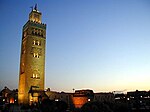 | Marrakesh | Cultural:
(i), (ii),
(iv), (v) | 1,107 (2,740) | 1985 | The town was founded in the 1070s and remained a political, economic, and cultural centre for a long time. Monuments from that period include the Koutobia Mosque the Kasbah , and the battlements. The city also holds newer features, including palaces. |
|---|
| Medina of Tétouan (formerly known as Titawin) | 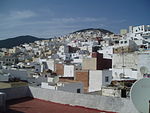 | Tétouan | Cultural:
(ii), (iv), (v) | 7 (17) | 1997 | Morocco's most complete medina served as the main point of contact between Morocco and Andalusia during the 8th century. The town was rebuilt by Andalusian refugees following the reconq |
|---|
| Portuguese City of Mazagan (El Jadida) |  | El Jadida | Cultural:
(ii), (iv) | 8 (20) | 2004 | The fortification, akin to Renaissance military design from the early 16th century, was taken over by Morocco in 1769. Surviving buildings include the cistern and a Gothic church. |
|---|
| Rabat, modern capital and historic city |  | Rabat-Salé-Zemmour-Zaer | Cultural:
(ii), (iv) | 349 (860) | 2012 | Rebuilt under the direction of the French from 1912 to the 1930s, the city blends historic and modern features, such as botanical gardens, the Hassan Mosque, and the remnants of Moorish and Andalusian settlements from the 17th century. |
|---|
Marrakesh
Marrakech in central Morocco is a popular tourist destination, but is more popular among tourists for one- and two-day excursions that provide a taste of Morocco's history and culture. The Majorelle botanical garden in Marrakech is a popular tourist attraction. It was bought by the fashion designer Yves Saint-Laurent and Pierre Bergé in 1980. Their presence in the city helped to boost the city's profile as a tourist destination.
El Jadida
El Jadida, formerly called Mazagan by the Portuguese, was registered as a UNESCO World Heritage Site in 2004, on the basis of its status as an "outstanding example of the interchange of influences between European and Moroccan cultures" and as an "early example of the realisation of the Renaissance ideals integrated with Portuguese construction technology". According to UNESCO, the most important buildings from the Portuguese period are the cistern, and the Manueline Church of the Assumption.


